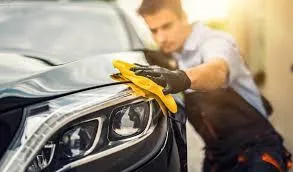
The Real Difference Between a Car Wash and Car Detailing
Most people use the terms interchangeably — but a car wash and a professional car detail are fundamentally different services that produce completely different results. If you've ever wondered why your car still looks dull after a wash, or why a recently detailed vehicle looks so much better than one that's just been cleaned, this is the explanation.
What a Car Wash Actually Does
A car wash — whether automatic or a basic hand wash — removes surface-level dirt and grime from your vehicle. It cleans what's sitting on top of your paint. A standard wash takes fifteen to thirty minutes, uses soap and water, and leaves your car looking noticeably cleaner than before. For regular maintenance between professional services, a proper hand wash is a valuable habit.
What a car wash doesn't do is address the contamination that has physically bonded to your clear coat. Iron particles from brake dust and road fallout embed themselves into the paint surface. Tree sap, tar, industrial fallout, and biological material chemically bond to the clear coat in ways that soap and water can't touch. A car wash also does nothing to correct the swirl marks and fine scratches that accumulate in your paint over time, and applies no meaningful long-term protection to the surfaces it cleans.
What Car Detailing Does
Car detailing is a comprehensive restoration and protection process. It goes several layers deeper than a wash in both the cleaning and protection it delivers.
A proper exterior detail starts with a foam cannon pre-wash that breaks down surface contamination before any contact is made with the paint. A two-bucket hand wash follows, cleaning every panel with a clean microfiber mitt that minimizes the risk of dragging abrasive particles across your clear coat. Wheels, tires, and wheel wells are cleaned with dedicated products designed for the specific contamination they accumulate. Then comes clay bar decontamination — one of the most important steps that no car wash includes.
The clay bar is a synthetic compound that physically pulls bonded contamination out of the clear coat surface. After clay treatment, your paint will feel completely smooth and glass-like in a way it almost certainly hasn't since the car was new. Exterior glass is then polished streak-free, trim is dressed and protected against UV fading, and a spray sealant or carnauba wax is applied as the final protective layer.
A proper interior detail is equally comprehensive. It includes a full vacuum of every surface — seats, carpets, floor mats, trunk, door pockets, and under seats — followed by compressed air to clear vents, crevices, and seams. Carpet and mats are shampooed and hot-water extracted to remove deep-set stains and odors. Fabric seats are extracted and cleaned; leather seats are cleaned with pH-balanced cleaner and conditioned. Every dashboard, console, and door panel surface is wiped down with appropriate products. Interior glass is cleaned streak-free. UV protectant is applied to all plastics and vinyl to slow the fading and cracking that Texas sun causes.
A full detail combines both the exterior and interior services in a single comprehensive visit, typically taking four to eight hours depending on the vehicle's size and condition.
The Clay Bar: The Single Biggest Difference
If you want to understand the gap between a car wash and a proper exterior detail in one concept, it's the clay bar. Run your hand across a freshly washed car hood. Feel that slight roughness or grittiness even though the car looks clean? That's bonded contamination embedded in the clear coat. Now imagine running your hand across the same surface after clay bar treatment — it feels like glass. Completely smooth, completely clean in a way that washing alone cannot achieve.
This matters because paint protection products — wax, sealants, and especially ceramic coatings — bond to your paint surface. If that surface has embedded contamination underneath them, the bond is weaker, the protection is less effective, and the longevity is significantly shorter. Clay bar decontamination is the foundation of any serious paint protection work.
Which One Does Your Car Actually Need?
A regular car wash every two to three weeks is good maintenance that prevents contamination from building up on your paint between professional services. A professional detail two to four times per year restores your vehicle at a deeper level — removing the contamination and wear that accumulates over months of driving.
For vehicles with paint defects like swirl marks and oxidation, adding paint correction addresses the clear coat condition that washing and detailing can't fix. For vehicles where the owner wants long-term paint protection with minimal ongoing maintenance, a ceramic coating after detailing is the most complete solution available.
KlenCars offers the full range of mobile detailing services across Austin, Cedar Park, Leander, Liberty Hill, and West Lake Hills. Book your detail today or view all our services to find the right option for your vehicle.