Headlight Restoration in Austin TX: Clear Up Yellowed Foggy Lights
Yellowed, hazy headlights are one of the most visible signs of vehicle aging — and one of the most straightforward to fix with professional restoration. In Austin, where UV intensity is among the highest in the country for ten or more months per year, polycarbonate headlight lenses degrade faster than in most other climates. The result is the characteristic amber-yellow haziness that reduces both the appearance and the functional light output of your headlights. Here is what causes headlight yellowing, why it matters beyond aesthetics, and what professional restoration looks like.
Why Austin Headlights Yellow Faster
Modern headlight lenses are made of polycarbonate plastic rather than glass. Polycarbonate is lighter and more impact-resistant than glass, but it degrades under sustained UV exposure through a process called UV oxidation — the same process that degrades automotive clear coat. The factory applies a thin UV protective coating over the polycarbonate lens at production, but this coating degrades over time through UV exposure, thermal cycling, and the abrasive effects of road grit. Once the factory coating fails, the polycarbonate beneath begins yellowing rapidly. In Austin, where vehicles receive intense UV for the majority of the year, the factory UV coating on headlight lenses typically fails in three to five years, compared to six to eight years in lower-UV climates. The haziness that follows factory coating failure can develop from barely noticeable to severely yellowed within a single Austin summer.
Why Yellowed Headlights Are a Safety Issue
Yellowed and hazy headlights are not just an appearance problem — they are a safety issue. Studies have measured light output reduction of fifty percent or more from severely yellowed headlight lenses compared to clear ones. Reduced light output means reduced reaction time at night and in rain for both the driver seeing what is ahead and for oncoming drivers perceiving the vehicle's presence. In Texas, where significant highway driving after dark is common and deer crossings are frequent on rural roads throughout the Hill Country and Williamson County, the safety consequence of significantly reduced headlight output is real and measurable. Headlight restoration returns light output to near-factory levels and is one of the highest practical safety returns per dollar of any vehicle maintenance service available.
The Professional Restoration Process
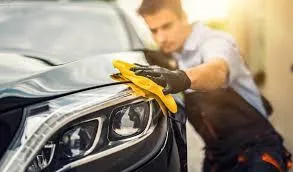
Professional headlight restoration uses wet sanding with progressively finer grits — typically 400 to 2000 grit — to remove the yellowed, degraded outer layer of the polycarbonate lens surface, revealing the clearer material below. After sanding, machine polishing with automotive compound and finishing polish removes the sanding marks and restores optical clarity to the lens surface. The critical final step is UV sealant application — a clear coat layer that protects the freshly restored polycarbonate surface from immediate UV re-degradation. Without UV sealant, a restored headlight begins yellowing again within months of restoration. With proper UV sealant application, the restoration result lasts one to three years depending on UV exposure and the quality of the sealant product used.
Restoration vs Replacement
New OEM headlight assemblies for most modern vehicles run two hundred to eight hundred dollars or more per headlight, plus installation labor. Professional headlight restoration runs significantly less and delivers clarity that is typically indistinguishable from new lenses for the restoration period. For most vehicles, restoration is the appropriate choice when the polycarbonate itself is intact and the yellowing is surface degradation rather than structural damage. Lenses with significant impact damage, deep scratching, or cracking that penetrates below the surface layer benefit from replacement rather than restoration. For the large majority of yellowed Austin vehicle headlights, which are surface UV degradation cases, professional restoration delivers excellent results at a fraction of replacement cost.
Adding Headlight Restoration to Your Detail
When to Restore vs When to Replace
Most Austin vehicle headlights that appear yellowed or hazy are excellent restoration candidates — the polycarbonate substrate is intact and the yellowing is surface UV degradation that sanding and polishing removes effectively. Signs that replacement may be the better choice include: deep physical damage such as cracks or significant impact pitting that penetrates below the surface layer, severe delamination of the original factory coating that has created a bubbled or peeling surface texture, or internal fogging caused by moisture intrusion into the headlight housing assembly. For the large majority of yellowed Austin headlights we assess, restoration is appropriate and delivers excellent clarity results. We will tell you honestly if we encounter a headlight where replacement is the more practical recommendation for your specific situation.
Headlight restoration is most conveniently performed as an add-on to a full detail or exterior detail appointment. The vehicle is already positioned and prepared for the restoration work, and the result completes the comprehensive fresh appearance that a full detail produces across the rest of the vehicle. KlenCars provides headlight restoration as a service add-on throughout Austin, Cedar Park, Leander, Liberty Hill, and West Lake Hills. Book your headlight restoration today or contact us to add it to an upcoming appointment.