Paint Correction Before and After: What to Expect in Austin TX
Paint correction is the most transformative single service in automotive detailing — but many Austin vehicle owners hesitate to book it because they are unsure what to expect or whether the result will justify the investment. This guide walks through exactly what a professional paint correction appointment looks like from start to finish, what the realistic before-and-after result is for different paint conditions, and what to do after the correction is complete to keep the result looking its best.
What Happens Before Polishing Begins
A professional paint correction appointment does not begin with a machine polisher. It begins with a thorough paint assessment. We wash the vehicle completely to remove surface contamination, then inspect every panel under LED lighting at multiple angles to identify the specific defect types present — swirl marks, random deep scratches, water spot etching, oxidation, buffer trails from previous amateur polishing attempts, and any areas of thin clear coat that require conservative treatment. Paint thickness measurements across all panels establish the safe working depth for each panel. This assessment determines whether one-stage or two-stage correction is appropriate and what compound and pad combinations will produce the best result without over-polishing.
The Decontamination Step
Before any polishing begins, full paint decontamination is performed. Iron remover is applied and allowed to react with embedded ferrous particles — the color change as it reacts with iron confirms that contamination was present and is being released. Clay bar treatment follows, extracting the biological material, mineral deposits, and organic residue that chemical decontamination alone cannot remove. On Austin vehicles with six months of pollen exposure, the clay bar step often produces dramatically visible results — the bar itself picks up a significant amount of contamination, and the paint goes from feeling like rough sandpaper to feeling like glass. This clean, decontaminated surface is the starting point for polishing.
What the Polishing Process Looks Like
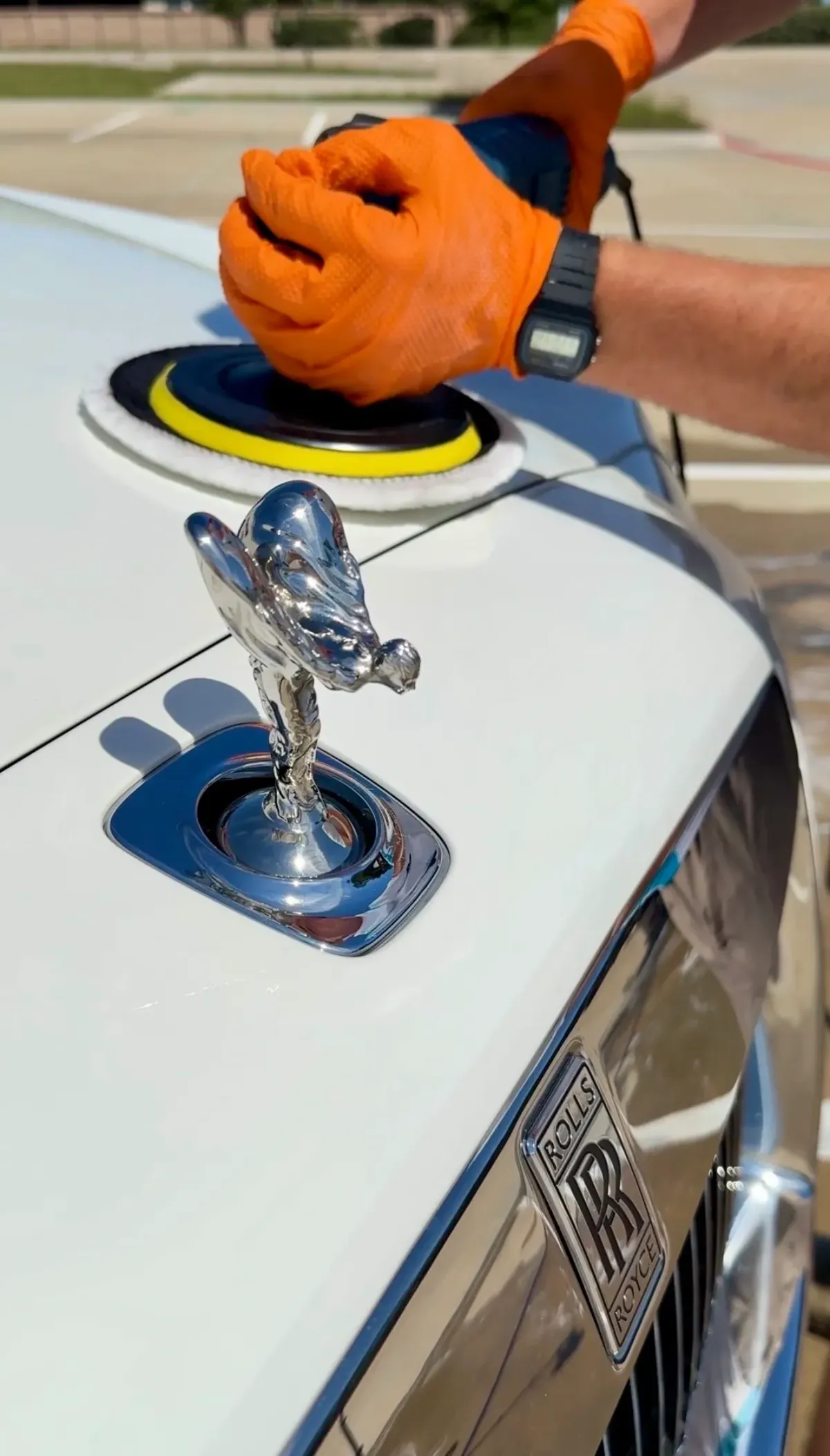
Correction is performed panel by panel. A test section on a less visible panel — usually a door — verifies that our compound and pad selection for your specific paint is producing the correct result before the full vehicle is committed. Each panel is taped at edges and trim to protect adjacent surfaces. The machine polisher works in overlapping cross-hatch passes at the appropriate speed for the compound and pad combination in use. After each pass, residue is removed with a clean microfiber and the result is inspected under LED lighting. A two-stage correction performs this sequence twice — once with the more aggressive compound and once with the finishing polish — before moving to the next panel.
The Realistic Before-and-After for Austin Vehicles
For a vehicle with moderate swirl marks and light oxidation — the most common condition for a three-to-five-year-old Austin daily driver — a one-stage correction removes sixty to eighty percent of surface defects. The hazy, webbed appearance in direct sunlight is dramatically reduced or eliminated. Reflections become sharper and more defined. Color appears richer and deeper. For vehicles with heavy swirl marks, significant oxidation beginning on horizontal panels, or scratches from previous careless washing, a two-stage correction removes eighty-five to ninety-five percent of defects. The result for most clients is a vehicle that looks better than it did when it left the dealership, because factory delivery and dealer prep rarely achieve the level of correction that a professional two-stage appointment produces.
After Correction: Protecting the Result
What Correction Cannot Fix
Honest communication about limits is part of every KlenCars paint correction consultation. Correction removes clear coat surface defects — swirl marks, light scratches, oxidation, water spot etching — that exist within the working depth available in your clear coat. It cannot fix scratches that have cut through the clear coat entirely into the base coat below — these show as white or differently-colored lines rather than the subtle swirl pattern that polishing addresses. It cannot fix dents, stone chips that have rusted, or any structural paint damage. For any correction appointment, we assess what is achievable for your specific paint before making any commitment, so you know exactly what to expect from the result before the work begins.
The corrected clear coat surface is in its best condition immediately after polishing — decontaminated, defect-free, and receptive to protection products. The most important decision after correction is what protection to apply. Spray sealant or wax provides temporary protection for three to six months. A ceramic coating installed immediately after correction provides multi-year protection that preserves the corrected result against UV, chemical etching, and swirl mark reaccumulation. Most clients who invest in a paint correction find that adding ceramic coating at the same appointment is the logical next step — the correction work has already prepared the surface perfectly for coating installation, and locking in the result with durable protection makes the combined investment significantly more valuable than either service alone. Book your Austin paint correction appointment today.