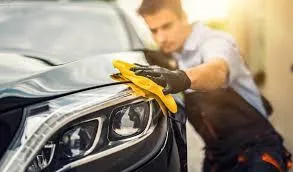
How to Protect Your Car Paint During Austin Summer
Austin summer is genuinely hard on car paint. From June through September, UV index regularly reaches the extreme category, interior temperatures exceed 60 to 70 degrees Celsius in direct sun, and the accumulated UV exposure from the hottest months of the year produces measurable paint degradation on unprotected vehicles. Here is a practical guide to protecting your car's paint through Austin's peak UV season — and what to do after summer ends to address any damage that accumulated despite protection efforts.
What Austin Summer Does to Your Paint
UV radiation breaks down the polymer chains in automotive clear coat through a process called photodegradation. In lower-UV climates, this process takes years to become visible. In Austin, where the UV season is both intense and long, photodegradation occurs faster and becomes visible sooner. The primary effects are oxidation — the clear coat surface becoming progressively duller, more porous, and less reflective — and color fading on darker vehicles where the UV breaks down the pigments in the base coat beneath the clear coat. Extreme heat from direct sun exposure also accelerates chemical reactions between ambient contamination and the clear coat surface, meaning bird droppings, tree sap residue, and pollen acids cause more damage during summer than during cooler months at equivalent exposure times.
Covered Parking: The Highest-Impact Protection Step
The most effective thing Austin drivers can do to protect their paint during summer is reduce direct UV exposure through covered parking. A garage or carport completely eliminates the primary threat. Even parking in building shadow during peak afternoon hours — typically noon to four PM when UV intensity is highest — meaningfully reduces the cumulative UV dose your paint receives across a summer. For vehicles that must park outdoors without shade access throughout the workday, the UV damage accumulation over a full Austin summer is significant and unavoidable without a protective coating in place. If covered parking access is limited, even partial shade from a parking structure or tall building provides meaningful reduction in peak UV exposure.
Ceramic Coating: The Long-Term Solution
For vehicles that park outdoors regularly, a ceramic coating provides the most effective available defense against summer UV. The coating's SiO2 network absorbs and reflects UV radiation rather than passing it into the clear coat below. Coated vehicles in Austin retain their gloss and color saturation through summer seasons that visibly degrade uncoated peers from the same model year. For vehicles already showing summer UV damage — early oxidation, slightly dulled gloss — paint correction can reverse the visible degradation before a coating is applied to prevent reaccumulation going forward.
Immediate Summer Care Habits
Beyond covered parking and ceramic coating, several habits meaningfully reduce summer paint damage. Washing regularly removes the contamination — bird droppings, pollen residue, sap — that causes accelerated damage in high UV conditions. Prompt spot treatment of bird droppings reduces the chemical etching that can cause permanent craters within hours in summer heat. A windshield shade used whenever the vehicle is parked in direct sun dramatically reduces interior temperature, protecting both interior surfaces and the electronics and adhesives that degrade in extreme heat. Keeping a quick detailer spray and microfiber towels in the vehicle for spot treatment makes it easy to address contamination promptly without a full wash.
After Summer: The Correction Window
Pre-Summer Preparation in April and May
The most effective time to protect your vehicle against summer UV damage is before summer begins — specifically April and May, when temperatures are rising but have not yet reached peak intensity. A professional exterior detail with full decontamination and fresh ceramic coating installation in April or May sends your vehicle into the summer UV season with the best possible protection already in place. For vehicles that already have a ceramic coating, the pre-summer window is appropriate for a coating maintenance service — professional decontamination wash and booster application — that refreshes the coating's UV resistance and hydrophobic performance before the most demanding season of the year begins.
Wax and Sealant Options for Uncoated Vehicles
For Austin vehicles without ceramic coating, spray sealant or paste wax applied after every professional exterior detail provides temporary UV and chemical protection between services. Spray sealants last three to four months in Austin conditions before reapplication is needed. Carnauba wax lasts four to eight weeks in summer heat before it degrades and needs reapplication. Neither matches the durability of ceramic coating, but both are better than no protection at all for vehicles where the coating investment is not in the plan. Applying fresh sealant or wax before summer begins — after the spring post-pollen decontamination detail — starts the UV season with the best available protection for uncoated paint and reduces the rate of oxidation accumulation through the most damaging months.
The August-September window, as the most intense UV period passes, is a practical time to assess your paint condition for any summer UV damage and address it before it compounds further through fall. A professional paint inspection at a KlenCars appointment evaluates your paint's current condition across all panels, identifies any oxidation beginning on horizontal surfaces, and recommends the appropriate correction approach if needed. Addressing early oxidation in September is significantly less involved and less expensive than addressing the same oxidation in a more advanced state the following spring. Book your summer protection detail or post-summer assessment today across Austin, Cedar Park, Leander, Liberty Hill, and West Lake Hills.