What Causes Swirl Marks and How to Remove Them for Good
Swirl marks are the most common paint defect on virtually every car that has seen regular use — and most car owners do not realize how significant they are until they look at their vehicle under direct sunlight or a strong shop light. What appears as a slightly dull or hazy finish in diffuse indoor light reveals itself as a dense web of fine circular scratches under direct illumination. Here is where they come from, why they matter, and what actually removes them permanently.
What Swirl Marks Actually Are
Swirl marks are fine scratches in your vehicle's clear coat that follow circular or arc patterns. Unlike deeper random scratches caused by keys or physical impacts, swirl marks are typically very fine — often only a few microns deep — but they appear in extremely high density across large areas of paint. Because they are distributed in circular patterns, they scatter light in all directions rather than allowing it to reflect cleanly. This scattered reflection produces the hazy, depth-less appearance that distinguishes a swirled finish from a properly maintained one. On dark-colored vehicles — particularly black, dark navy, and dark charcoal — swirl marks are dramatically more visible than on light colors. Under direct sunlight on a black car, heavy swirling can make a clean, freshly washed vehicle look as though it has been wrapped in a fine metallic mesh.
The Main Causes of Swirl Marks
Automatic car washes are the single largest contributor to swirl marks on most daily vehicles. Rotating brush-style washes drag the accumulated contamination from hundreds of previous vehicles across your paint at speed. Even soft foam and cloth brushes carry embedded grit from repeated use, and that grit creates fine scratches with every contact.
Improper hand washing technique is the second most common cause. Using circular scrubbing motions, using a single contaminated bucket, using sponges that trap dirt against the surface, or washing without a thorough rinse first all introduce swirl marks even in an otherwise careful hand wash.
Wiping a dusty or dry car is one of the fastest ways to create swirl marks. Dragging a microfiber cloth or paper towel across a car that has not been wetted and rinsed first puts all the dust and grit sitting on the surface between the cloth and the clear coat.
Poor previous detailing work — a detailer using incorrect machine speed, the wrong pad and compound combination, or working too aggressively can leave circular machine-induced marks that are their own form of swirl damage.
Why Wax and Sealant Do Not Fix Swirl Marks
This is one of the most persistent misconceptions in consumer car care. Wax, paint sealants, and one-step products that claim to simultaneously correct and protect work by filling swirl marks with clear filler — temporarily making them less visible in certain lighting conditions. Once the product wears away, the swirls are exactly where they were. These products do not remove swirl marks. The only permanent solution is paint correction — mechanical removal of the clear coat layer that contains the scratches using machine polishers and professional compounds.
How Professional Paint Correction Removes Swirl Marks
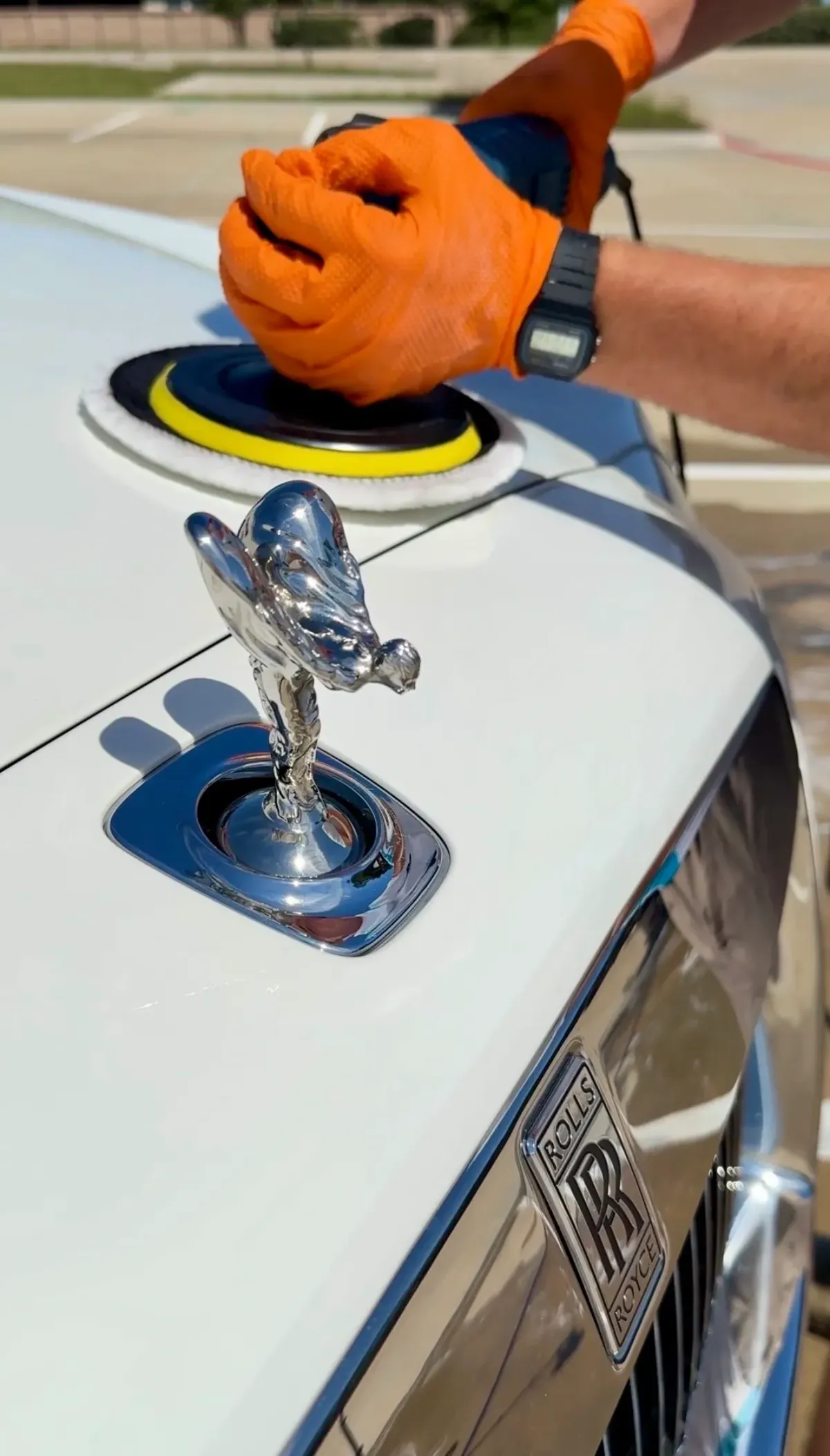
Paint correction uses a machine polisher in combination with foam or wool correction pads and professional-grade abrasive compounds and finishing polishes to remove a microscopic layer of the clear coat surface. By reducing the surface level below the depth of the swirl marks, the scratches physically cease to exist. The result is a completely flat, mirror-like surface that reflects light without scattering it. After correction, most clients choose to protect the result with a ceramic coating, which adds a hard protective layer that resists the light contact abrasion that creates swirl marks over time.
Preventing Future Swirl Marks
Prevention is straightforward once you know the causes. Always use the two-bucket wash method with clean microfiber mitts. Never wipe a dusty car without rinsing first. Avoid automatic brush-style car washes entirely. Use a pH-neutral shampoo. Dry with a clean, plush microfiber drying towel rather than dragging anything across wet paint.
The Real-World Cost of Swirl Marks
Beyond aesthetics, swirl marks have a direct and measurable impact on your vehicle's resale value. Buyers of used vehicles — both private party buyers and dealership appraisers — consistently use paint condition as one of the primary visible indicators of how well a vehicle has been cared for overall. Heavily swirled paint signals a vehicle that has been washed carelessly and likely maintained without much attention throughout its life. That signal affects the price buyers are willing to offer, often by significantly more than the cost of the paint correction that would address the swirling. A vehicle that commands a strong asking price tends to be one where the paint, interior, and mechanical condition all signal consistent, careful ownership — and paint condition is the first and most visible of those signals that any buyer assesses.
For Austin area vehicles approaching the two to three year mark without professional correction, swirl marks have almost certainly accumulated to a visible level from the combination of pollen-season washing challenges, automatic car wash use, and the general abrasion of maintaining a daily driver in a dusty, high-UV environment. The good news is that a single professional paint correction appointment addresses all of the accumulated damage at once, and the result — inspected under direct sunlight after correction — typically surprises even clients who thought they had a realistic picture of how swirled their paint had become. The depth, clarity, and reflectivity of correctly corrected paint under good lighting is genuinely different from what swirled paint produces, and most clients find the transformation to be one of the most satisfying results of any vehicle investment they have made.
KlenCars offers professional paint correction across Austin, Cedar Park, Leander, Liberty Hill, and West Lake Hills. Book your paint correction appointment today or get in touch to discuss your vehicle's paint condition.