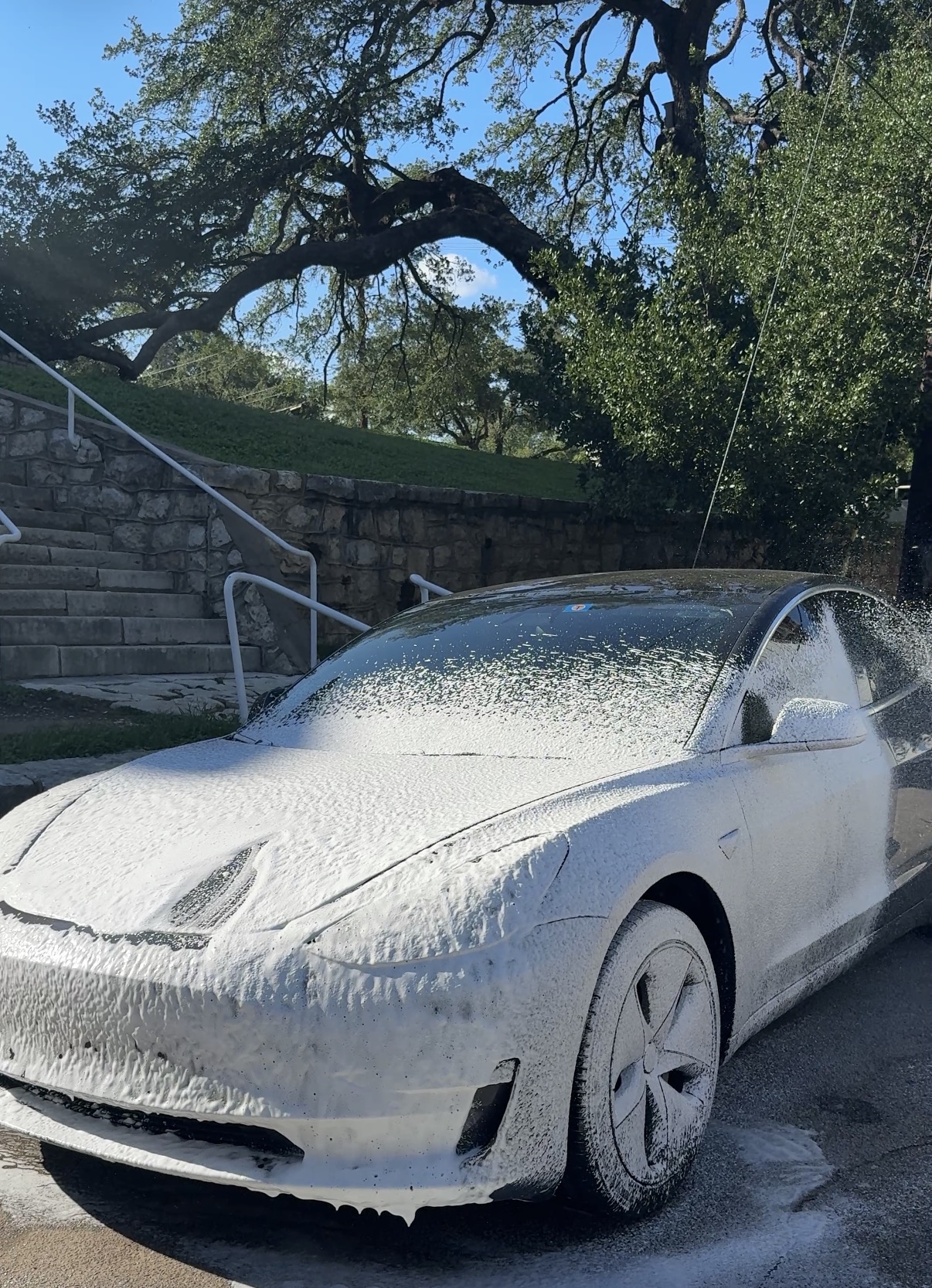
What Is a Decontamination Wash and Why Does Your Car Need One?
Most car owners assume a thorough wash removes everything from their paint. What it does not remove is the contamination that has physically bonded to the clear coat surface. That layer of embedded contamination is actively degrading your paint every day it remains, and it prevents protective products from performing as designed. A decontamination wash addresses what regular washing leaves behind, and understanding why it matters changes how you approach car care maintenance.
What Bonded Contamination Is
As your vehicle travels roads and sits outdoors, microscopic particles embed themselves into your clear coat rather than simply sitting on top of it. Iron particles from brake dust are among the most common — when brake pads contact rotors, fine metallic particles travel through the air and land on your paint. At the temperature of fresh brake dust, these particles can partially fuse into the clear coat surface. Iron fallout from road traffic, tar from asphalt, tree sap residue, and mineral deposits all bond to clear coat through similar mechanisms. Standard washing removes surface contamination but cannot break these embedded bonds. The result is a paint surface that feels slightly rough or gritty even when visually clean — a texture you can detect by running clean fingertips across freshly washed and dried paint.
Why Bonded Contamination Damages Your Paint
The rough surface texture from embedded particles means any physical contact with the paint — washing, drying, driving through rain — creates micro-scratches as contact media drags across raised contamination rather than smooth clear coat. Contamination also prevents protective products from bonding properly. Wax, sealant, and especially ceramic coating applied over contaminated paint cannot achieve complete, even adhesion to the actual clear coat surface. The performance and longevity of these protective products is significantly reduced when applied without proper decontamination first — sometimes dramatically so for ceramic coatings that require pristine surface chemistry to form their molecular bond effectively.
Chemical Decontamination
Iron remover products react visibly with embedded iron particles — the color change you see spreading across the paint surface as the product contacts iron shows you exactly where embedded contamination is present. Sprayed onto a wet vehicle and allowed to dwell several minutes, the reaction progresses and then rinses away with the released iron particles. Tar remover products dissolve petroleum-based deposits using chemistry formulated to be safe on clear coat. Chemical decontamination addresses what can be broken down chemically and prepares the surface for the physical decontamination step that follows.
Physical Decontamination: Clay Bar
After chemical treatment, clay bar decontamination removes what chemical products loosened and everything they could not address. The clay bar is worked across a well-lubricated paint surface, physically collecting and extracting embedded particles from the clear coat. The result is immediately and unmistakably tangible — after clay treatment, your paint feels completely smooth and glass-like in a way it may not have since the vehicle was new. First-time clay bar clients are almost universally surprised by the before-and-after tactile difference.
When Your Car Needs Decontamination
In Central Texas conditions, decontamination should be performed at minimum twice yearly — after the six-month pollen season ends in late spring, and once in fall. Before any ceramic coating installation, full decontamination is mandatory. Before any paint correction, decontamination must precede polishing. The fingertip test is the simplest diagnostic: if freshly washed and dried paint feels anything other than completely smooth, decontamination is overdue.
KlenCars includes full decontamination in all exterior detail services across Austin, Cedar Park, Leander, Liberty Hill, and West Lake Hills. Book your detail today or contact us.
Building Decontamination Into Your Annual Schedule
For most Austin area vehicles, the most practical decontamination schedule is twice yearly — once in late May or early June after oak pollen season ends, and once in late October or November before cedar season begins. This schedule aligns decontamination with the two most significant contamination-loading periods of the Central Texas year and ensures your paint starts each high-impact season with a clean, properly prepared surface. For vehicles that regularly drive through active construction zones, gravel roads, or agricultural areas, quarterly decontamination is more appropriate given the accelerated embedding rate those environments create. Any vehicle receiving a ceramic coating installation needs full decontamination immediately before the coating is applied regardless of when the last detail was performed — coating over contaminated paint is one of the most common installation errors and it compromises the coating adhesion and performance from the moment it goes on. Our exterior detailing service includes full chemical and physical decontamination as standard procedure at every visit across our complete service area. Book your decontamination detail today.
Building Decontamination Into Your Annual Schedule
For most Austin area vehicles, the most practical decontamination schedule is twice yearly — once in late May or early June after oak pollen season ends, and once in late October or November before cedar season begins. This schedule aligns decontamination with the two most significant contamination-loading periods of the Central Texas year and ensures your paint starts each high-impact season with a clean, properly prepared surface. For vehicles that regularly drive through active construction zones, gravel roads, or agricultural areas, quarterly decontamination is more appropriate given the accelerated embedding rate those environments create. Any vehicle receiving a ceramic coating installation needs full decontamination immediately before the coating is applied regardless of when the last detail was performed — coating over contaminated paint is one of the most common installation errors and it compromises the coating adhesion and performance from the moment it goes on. Our exterior detailing service includes full chemical and physical decontamination as standard procedure at every visit across our complete service area. Book your decontamination detail today.