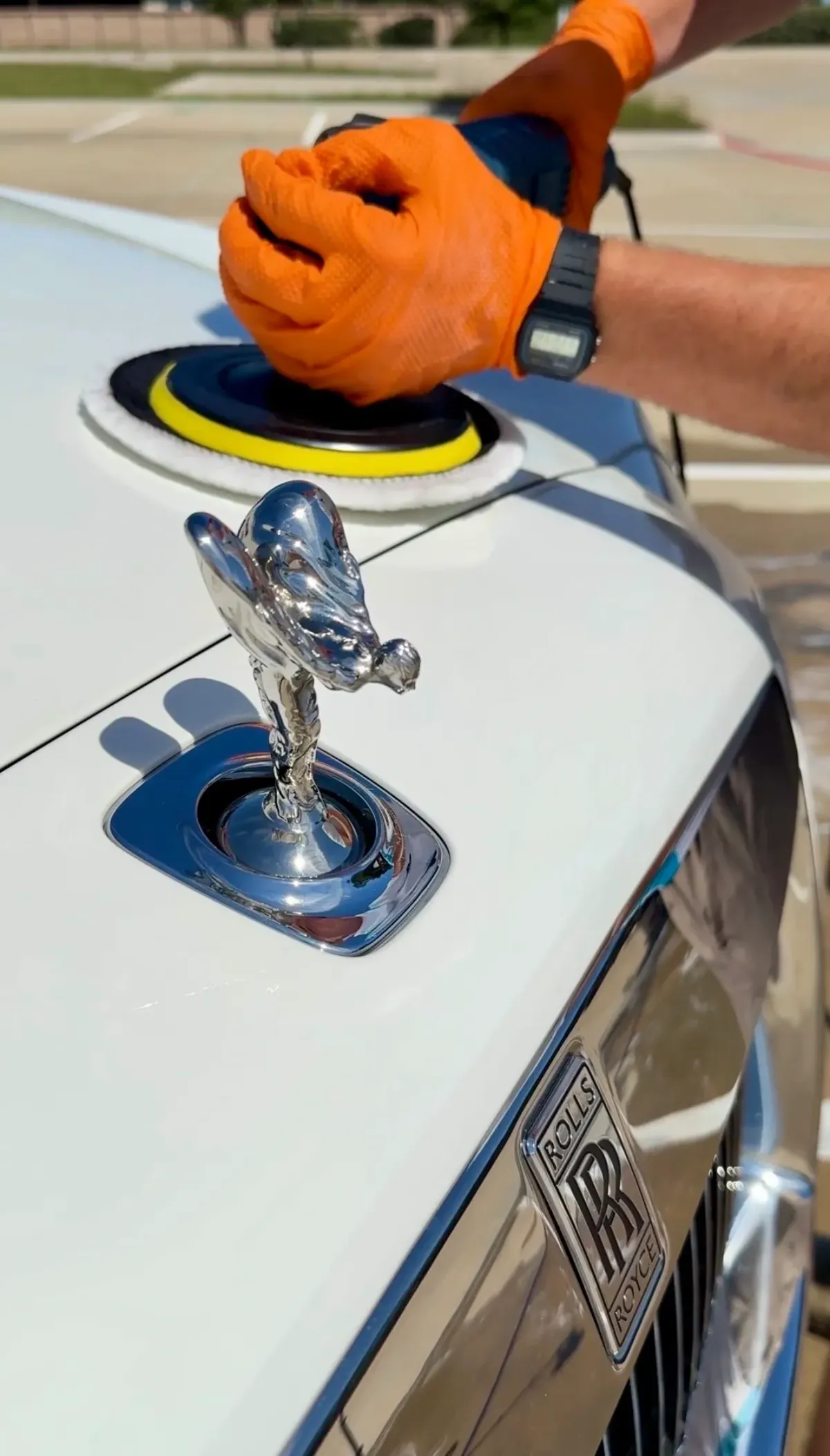
What Is Paint Correction and Does Your Car Need It?
Look at your car under direct sunlight or hold a bright flashlight close to the paint surface. If you see a web of fine circular scratches swirling across the finish, or a dull haze where the color should look deep and rich — that's paint defects, and they don't come off with a wash or a coat of wax. The only real solution is paint correction.
Paint correction is one of the most misunderstood services in car detailing. Many people confuse it with a detail wash or assume it involves repainting panels. It's neither. Here's a complete breakdown of what paint correction actually is, what it fixes, and how to know whether your car needs it.
What Paint Correction Actually Is
Paint correction is the process of using machine polishers, foam or wool cutting and finishing pads, and professional-grade compounds and polishes to remove a microscopic layer of your vehicle's clear coat. By leveling the surface below the depth of the defects, the scratches, swirl marks, and oxidation disappear — leaving a flat, mirror-like finish that reflects light cleanly and without the hazy, scattered appearance that most cars develop over years of regular use.
This is a mechanical process, not a masking one. Products like glazes and one-step waxes temporarily fill in swirl marks with clear fillers, making them less visible — but they return as soon as the product wears off. Paint correction physically removes the defects. When done correctly, the results are permanent until new defects are introduced through future washing or contact.
What Paint Correction Fixes
Paint correction addresses a range of clear coat defects that accumulate on virtually every daily-driven vehicle over time:
- Swirl marks — the most common defect. Caused by automatic car washes, circular hand washing motions, dirty wash mitts, and improper drying. They appear as a web of fine circular scratches most visible under direct or artificial light.
- Random deep scratches (RDS) — isolated scratches from keys, rings, branches, or careless contact. Depth determines whether they can be fully removed or significantly improved.
- Oxidation and dullness — UV radiation breaks down the clear coat over time, creating a chalky or hazy surface appearance. Polishing removes the oxidized layer and reveals fresh, clear coat underneath.
- Water spot etching — hard water minerals left to evaporate on paint etch into the clear coat and leave permanent marks. Common in Central Texas due to high mineral content in municipal and well water.
- Buffer trails and holograms — swirl-like marks left by incorrect machine polishing during previous detailing work. Often only visible in direct or artificial lighting.
- Light scratches within the clear coat — any scratch that hasn't penetrated through to the base coat can typically be fully or significantly corrected through polishing.
The Stages of Paint Correction
Not every car needs the same level of correction. We assess your paint's condition and recommend the appropriate stage based on the severity of defects and your goals.
One-stage polish uses a single round of machine polishing with a light to medium compound. It removes approximately 50 to 70 percent of surface defects and is ideal for vehicles in relatively good condition being prepared for a protective coating or sealant.
Two-stage correction combines a more aggressive compounding stage with a finishing polish stage. It removes 80 to 95 percent of surface defects and is appropriate for vehicles with moderate to heavy swirling, light scratches, and early oxidation.
Multi-stage full correction involves multiple rounds of compounding and polishing to achieve maximum possible defect removal. This is the right choice for show-level results or vehicles being prepared for a premium ceramic coating installation where the paint needs to be as close to perfect as possible.
Why Paint Correction Matters Before Ceramic Coating
If you're considering ceramic coating, paint correction is not optional — it's essential. Ceramic coating is transparent. Whatever is on your paint when the coating goes on gets locked in permanently beneath a glass-like layer. Swirl marks, fine scratches, and haze that might be subtle on bare paint become more visible under a coating because the coating amplifies reflection.
Every KlenCars ceramic coating installation includes a paint assessment and the appropriate stage of correction to ensure the surface being protected is as good as it can be. The correction work is where most of the visual transformation happens — the coating locks it in and preserves it going forward.
The KlenCars Paint Correction Process
Before any polishing begins, we measure clear coat thickness across all panels using a paint thickness gauge. This tells us how much material is available and how aggressively we can safely work. We then perform a full decontamination wash and clay bar treatment — polishing over contaminated paint causes more damage rather than correcting it. A test panel is completed first to dial in the right product and pad combination for your specific paint before we work the whole vehicle.
Machine polishing is completed panel by panel in a controlled environment. Once polishing is complete, the surface is inspected under high-intensity detailing lights to ensure every panel meets our standard. An IPA wipe-down removes all polishing oils before any protective product is applied.
Does Your Car Need Paint Correction?
If your paint looks dull or hazy in direct sunlight despite being clean, if you can see swirl marks under a flashlight or bright artificial light, if white or silver paint has a chalky surface texture — your car is a candidate for paint correction. You don't need to be a car enthusiast to benefit from it. Any vehicle whose owner cares about its appearance and value will look significantly better after a proper correction.
KlenCars offers professional mobile paint correction across Austin, Cedar Park, Leander, Liberty Hill, and West Lake Hills. Book your paint correction appointment or contact us to discuss what stage of correction your vehicle needs.